Showing posts with label UTK Polis. Show all posts

Saturday, May 21, 2011

How to Detect Their Liar

STEPS

  1. 1
    Establish a base line. A base line is what someone acts like when they are not lying. You have to get a base line before you proceed with anything. Imagine you have a itch on your nose ever since you got out of bed. Someone might think you are hiding something because you scratch your nose when answering a question, when really you've been scratching your nose all day. To establish a baseline, you need to see the person when they aren't lying. Try asking what their name is, and what they do for a living. If any of the signs below pop up when you know they're telling the truth, then those signs aren't indicative of lying.


  2. 2
    Learn to recognize deflections. Usually when people are lying, they will tell stories that are true but are deliberately aimed at not answering the question you asked. If a person responds to the question "Did you ever hit your wife?" with an answer such as "I love my wife, why would I do that?", the suspect is technically telling a truth, but they are avoiding answering your original question, which usually means they're lying.
  3. 3
    Notice the behavior of other body parts. Watch their hands, arms and legs, which tend to be limited, stiff, and self-directed when the person is lying. Their hands may touch their face, ear, or the back of the neck. These are, however, a sign of nervousness, not a sign of deceit. They might not necessarily be nervous because they're lying.
  4. 4
    Look out for microexpressions. Microexpressions are facial expressions that flash on a person's face for a fraction of a second and reveal the person's true emotion underneath their facade. Some people may be naturally sensitive to them, but almost anybody can easily train to be able to detect microexpressions. Typically, in a person who is lying, their microexpression will exhibit the emotion of distress, characterized by the eyebrows being drawn upwards towards the middle of the forehead (sometimes causing short lines to appear across the forehead skin).
  5. 5
    Check for sweating. People tend to sweat more when they lie. (However, some people may sweat a lot more during nervousness/shyness.) But this is not always a reliable indication of lying.
  6. 6
    Mind exaggerated details. See if they are telling you too much, like "My mom is living in France, isn't it nice there? Don't you like the Eiffel tower? It's so clean there." Too many details may tip you off to their desperation to get you to believe them.
  7. 7
    Notice the person's eye movements. Contrary to popular belief, a liar does not always avoid eye contact. Humans naturally break eye contact and look at non-moving objects to help them focus and remember. Liars may deliberately make eye contact to seem more sincere. You can usually tell if a person is remembering something or making something up based on their eye movements. When someone is remembering details, their eyes move to the right (your right). When someone is making something up, their eyes move to the left. It's usually reversed for lefties.
  8. 8
    Be aware of their emotional responses
    • Timing and duration tends to be off when someone is lying. If you ask someone a question and they respond directly after the question, there is a chance that the person is lying. This can be because they have rehearsed the answer, or they're already thinking about the answer just to get it over with and move forward.
    • Pay close attention to the person's reaction to your questions. A liar will often feel uncomfortable and turn their head or body away, or even subconsciously put an object between the two of you. Also, while an innocent person would go on the offensive (usually responding with anger, which will usually be revealed in a microexpression directly after you say you don't believe them), a guilty person will often go immediately on the defensive (usually by saying something to reassure their facts, such as deflections).
  9. 9
    Listen for a subtle delay in responses to questions. An honest answer comes quickly from memory. Lies require a quick mental review of what they have told others to avoid inconsistency and to make up new details as needed. However, when people look up to remember things, it does not necessarily mean that they are lying.
  10. 10
    Be conscious of their usage of words. Verbal expression can give many clues as to whether a person is lying, such as:
    • Using/repeating your own exact words when answering a question
    • Avoiding use of contractions
    • Vocal pitch rising
    • Avoiding direct statements or answers (deflections)
    • Speaking excessively in an effort to convince
    • Speaking in a monotonous tone, speaking with a jumpy tone, or allowing pitch to rise and fall unnaturally
    • Leaving out pronouns (he, she, it, etc.)
    • Speaking in muddled sentences
    • Using humor and sarcasm to avoid the subject
    • Allow silence to enter the conversation.
    • Pausing at an unusual time, such as in the middle of a sentence
    • If they're lying, they will become uncomfortable if you stare at them for a while with a look of disbelief. If they're telling the truth, they will usually become angry or just frustrated (lips pressed together, brows down, upper eyelid tensed and pulled down to glare).
  11. 11
    Change the subject quickly. While an innocent person would be confused by the sudden shift in the conversation and may try to return to the previous subject, a liar will be relieved and welcome the change. You may see the person become more relaxed and less defensive.
  12. 12
    Watch his or her throat. A person may constantly be either trying to lubricate their throat when he/she lies by swallowing or clearing their throat to relieve the tension built up. A person's voice can also be a good lie indicator; they may suddenly start talking faster or slower than normal, or their tension may result in a higher-pitched speaking tone.
  13. 13
    Follow through. If you have the means, check the validity of what the liar is saying. A skilled liar might give some reason why you shouldn't talk to the person who could confirm or deny a story. Perhaps the liar will imply that the person is particularly favorable towards the liar, or that the person would have little time for you. These are probably lies themselves, so might be worthwhile overcoming your reluctance and to check with the person you've been warned against.
  14. 14
    Notice it when the suspect repeats sentences. If the suspect uses almost the exact same words over and over, then it's probably a lie. When a person makes up a lie, he often tries to remember a certain phrase or sentence that sounds convincing. When asked to explain the situation again, the liar will use the very same 'convincing' sentence again.

TIPS

  • Just because someone exhibits one or more of these signs does not mean they are lying. The above behaviors should be compared to a person's base (normal) behavior whenever possible.
  • The more you get to know someone, the better you will become at recognizing their thinking style and the better you will become at knowing when they may be straying from the truth. In the ordinary course of events, you will see a consistent pattern of eye movements. If a person breaks their pattern, this may well suggest that they are deviating from the truth, though they may not be lying deliberately. To test the pattern break, ask more questions to try and clarify whether the pattern break was indeed an attempt to tell a lie.
  • Some of the behaviors of a liar listed above also coincide with those of an extremely shy person, who might not be lying at all.
  • Some of the behaviors may also occur when somebody is very concentrated on speaking (for example, when the topic is sophisticated or the person is stressed).
  • Botox or other plastic surgery may also interfere with 'tells' and give false positives.
  • Some people may have reputations for lying; keep this in mind, but don't let it mask your opinions all the time. You have to take it on a case-by-case basis.
  • Some people are extremely experienced or even professional liars. He or she has told their made up story so many times that they are actually believable, getting all their days, dates and times down perfectly! Sometimes, you may need to simply accept that you can't catch every lie all the time.
  • Many of the signs that a person is lying are also signs that they are simply nervous. This can especially be the case if they are uncomfortable with the subject they are talking about.
  • If they are being accused of something they, they may be a defensive to convince you otherwise. This may seem like they are lying but they are just shocked to be put at the center of attention unexpectedly.
  • Most people tell the truth most of the time, and will cherish their reputation. Liars will 'sail close to the wind' - they'll artificially bolster their reputation so that they seem more credible or desirable than they actually are.
  • Train yourself to lie, and well. If you can lie very well, you should be able to tell when others are lying.
  • A lier might use objects around them to help put detail into their lies, e.g. there might be a pen on the table and then in the story it might include a pen.

WARNINGS

  • Be careful of how often you appraise others' truthfulness. If you are always looking for lies, people may avoid you.
  • Remember that eye contact is considered rude in some cultures, so this may explain why they are reluctant to look at you in the eye consistently.
  • Some people with developmental disabilities like Autism or Asperger's syndrome are very reluctant to make eye contact or do not make eye contact at all. This is a trait of the Autism spectrum and not a sign of dishonesty. Also, some people like to stare at you eye-to-eye.
  • Forcing a smile is often just an attempt to be polite; don't take this personally. If someone fakes a smile for you, it can also mean that they want to make a good impression on you because they value you as a person and are showing respect.
  • Someone who is deaf, or hard-of-hearing, may need to watch your mouth instead of your eyes, in order to lipread or better understand what you are saying.


Read more: http://ilhamnurulresources.blogspot.com/#ixzz1MvBILggR

Teknologi Tentera Masa Depan

Teknologi di dunia terus berkembang.Di tahun 2020,Askar di seluruh dunia akan mampu memanfaatkan teknologi yang belum pernah ada sebelumnya dalam sejarah manusia.Dengan teknologi seperti robotik dan nanoteknologi,maka kita akan mampu menciptakan teknologi tentera yang hebat di masa hadapan.
Berikut adalah ciri-ciri definitif para tentera dalam medan tempur masa depan :

1. Kekuatan Manusia Super.
Tentara masa depan akan ditunjangi dengan kerangka mesin pintar yang akan melipatgandakan kekuatan fiziknya.Dengan kerangka super ini,baik menggunakan teknologi robot atau nanoteknologi,tentera akan boleh bergerak/berlari lebih cepat,lebih lama,sambil membawa beban berat dengan hanya mengeluarkan sedikit tenaga.

Beban yang boleh diangkat dengan technological enhancement ini diperkirakan boleh mencapai lebih dari 200 kg.Tentera ini juga boleh membawa senjata yang lebih besar yang sebelumnya hanya boleh dibawa oleh kenderaan militer,serta membawa peluru yang lebih lengkap.Ketika ada kawannya yang terluka, maka dia boleh mengangkat kawannya itu dengan sangat mudah.

2. Baju Pelindung Super Dengan Nanoteknologi.
Baju tentera masa depan akan jauh lebih kuat dari Kevlar dan super ringan.Ini dimungkinkan dengan menggunakan material nanoteknologi yang super kuat.Beberapa bahan nanoteknologi seperti carbon nanotube kerasnya melebihi intan.

Baju ini akan jauh lebih tahan peluru yang bersaiz besar,tahan letupan yang sangat kuat,bahkan tahan terhadap cuaca ekstrim seperti panas atau dingin yang ekstrim.Ketika ini yang banyak digunakan adalah bahan dari metal atau komposit keramik,beratnya mengganggu fleksibiliti serta mobiliti tentera.Sedangkan pakaian yang diperkuat nanoteknologi akan seringan dan sefleksibel baju dari kain biasa.

Ini membuat tentera ini akan mampu bergerak lebih cepat dan efisien (rapid movement).Kementerian Pertahanan Amerika sedang melakukan kajain baju pelindung yang mampu menahan peluru seperti halnya airbag dalam kereta.Ketika peluru datang, maka sensor super canggihnya akan langsung memperkuat bagian yang akan terkena sasaran peluru tersebut.

3. Teknologi Stealth / Predator Effect.
Dengan teknologi bahan nanoteknologi yang mampu beradaptasi,baju tentera ini boleh berubah-ubah penampilannya sesuai dengan lingkungannya.Intinya adalah tentera susah dikesan oleh musuhnya.Bajunya akan berubah warna menjadi hitam di waktu malam,ia akan berwarna hijau gelap di dalam hutan,berwarna pasir di padang pasir,atau berwarna putih di musim salji. Saat ia sedang berada di perkotaan, atau di sebuah pesta,maka pakaian nanoteknologi pintar itu akan menyesuaikan diri dengan sendirinya.

4. Helmet Berteknologi Advanced Hud.
Helmet yang disokong teknologi display digital akan mampu memberikan pemandangan dan maklumat yang super detail dari medan pertempuran.Anda boleh melihat apa yang tidak ampu dilihat oleh musuh anda.Helm itu akan dilengkapi perlengkapan standard sinar infra-red untuk melihat dalam kegelapan,juga layar advanced-HUD (Heads Up Display,seperti yang ada di pesawat tempur canggih) yang mampu memberikan pandangan taktik dan strategis,data dan maklumat medan perang real-time melalui satelit.

Melalui layar itu,tentera akan mengetahui secara tepat kedudukan dan jumlah musuh.Di saat santai,layar ini juga boleh untuk menonton DVD,Discovery Channel,dan channel lainnya.Helmet ini juga dilengkapi speaker yang digunakan untuk menerima arahan dan maklumat langsung dari markas operasi pertempemran melalui pemimpin pasukan,serta dapat pula digunakan untuk mendengarkan lagu-lagu MP3.

5. Perlengkapan Peralatan Sokongan Yang Canggih.
Selain kelengkapan-kelengkapan diatas,teknologi ini juga dilengkapi dengan berbagai perlengkapan yang menyokong keselesaan para tentera masa depan.Kantung air minum yang boleh diubah untuk 6 macam minuman yang berbeza,dari minuman bertenaga,teh melati,jus buah-buahan,sampai kopi susu untuk operasi di malam hari.

Alat mekanik dengan nanoteknologi yang boleh melakukan urutan-urutan akupuntur dan akupressure di bahu,leher,lengan,belakang dan kaki.Apabila diperlukan tentera dapat dengan mudah menggunakan sistem telekomunikasi canggih satelit untuk berhubung.


Read more: http://ilhamnurulresources.blogspot.com/#ixzz1Mv9jeqqv

Thursday, May 5, 2011

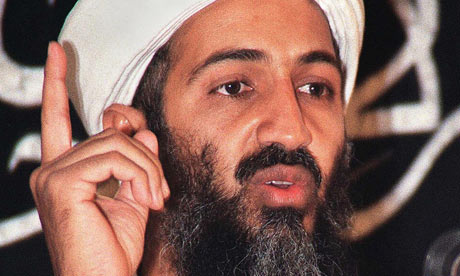
Osama Ben Laden Is Confirmed Death


Osama bin Laden
Osama bin Laden has been killed by US operatives in Pakistan,US President Obama announced.
Osama bin Laden, the criminal mastermind behind al-Qaida and the world's most sought-after terrorist since the attacks of 11 September 2001, has been killed by a US operation, President Barack Obama has announced.

In an address to the nation, President Obama said Bin Laden was killed in a "targeted operation" in Abbottabad, a highland town north of Islamabad, last night.
The operation started with an intelligence lead last August, and culminated in an operation involving a "small team of Americans". "After a firefight they killed bin Laden."
None of the Americans was killed. Pakistani co-operation "helped to lead us to him" he said.
Osama's body is in possession of the US, according to the first reports from the US television networks.
As the news spread, crowds gathered outside the gates of the White House in Washington DC, singing the national anthem and cheering.
President Obama made the highly unusual Sunday night live statement to announce the news at around 11.30pm eastern time.
Bin Laden's capture comes eight years to the day that President George Bush declared "mission accomplished" in Iraq. As president, Bush declared he wanted bin Laden "dead or alive" – but it is now the unlikely figure of Barack Obama who has been able to announce the final triumph as US commander-in-chief.
This is a turning point in the global "war on terrorism" that has been waged since 9/11 - and the news will reverberate around the world.
The news comes as an unparalleled boost for US foreign policy, the key aim of which since 2001 has been the disarming and dismemberment of al-Qaida, and coincidentally probably ensures the re-election of Obama in 2012.
As a candidate during the 2008 election campaign, Obama repeatedly vowed: "We will kill Osama bin Laden." And so it has proved.
The Obama statement was scheduled originally for 10.30pm, but the need to inform US congressional leaders caused the delay.
In the Pakistani capital, Islamabad, one western diplomat described the news as a "game changer" – not just for al-Qaida, but also for US foreign policy in Pakistan and Afghanistan, a region embroiled in turmoil and violence since 2001.
"I'm overjoyed," said the diplomat. "But what this exactly means is really not clear."
Some analysts fear bin Laden's death could spark a precipitous US withdrawal from the region, with the war against the Taliban in Afghanistan still unresolved.
It will likely also reconfigure relations with Pakistan, where the CIA is engaged in a controversial assassination campaign against senior al-Qaida figures using Predator and Reaper drones.
"He's dead," said an official with Pakistan's Inter-Services Intelligence, declining to give details other than to say that it was "highly sensitive intelligence operation".
The official said he was "not at liberty" to give further details on the killing, including on reports that Pakistani intelligence was involved in the operation. "We'll release more information later this morning," he said.
Abbottabad is about two hours' drive north of Islamabad, in Khyber Pakhtunkhwa province. It is not part of the tribal belt, where the CIA drone strike campaign has been concentrated, but is home to the Pakistan military's main training institution, the Pakistan Military Academy at Kakul.
The fact that bin Laden was killed outside the tribal belt in Pakistan will raise questions about how the six-foot four-inch fugitive, one of the most famous faces in the world, managed to escape justice for so long.
Pakistan's intelligence services have largely co-operated with the US in capturing al-Qaida fugitives - some of the most notorious figures seized since 2001 were caught in Pakistan's cities such as the architect of 9/11, Khalid Sheikh Muhammad.
In recent months US military and intelligence officials have publicly complained that the ISI has been assisting the Haqqani network, an al-Qaida-linked militant network that straddles the Pakistan-Afghanistan border.


Read more: http://ilhamnurulresources.blogspot.com/#ixzz1LQQg7HoR

Rahsia Masjid Al-Aqsa

Al-Masjid al-Aqsa adalah merupakan masjid ketiga tersuci di dalam agama Islam. Ianya juga merupakan tempat di mana Allah memperjalankan nabi Muhammad SAW pada waktu malam semasa peristiwa Isra’ dari al-Masjid al-Haram di Makkah ke al-Masjid al-Aqsa di al-Quds. Lokasinya terletak di kawasan yang diberkati dan suci. Keberkatan kawasan tersebut bukan sahaja dapat dinikmati daripada aspek keagamaan sahaja, tetapi daripada aspek fizikal pun dapat dirasai, seperti kesuburan tanah yang menghasilkan produk perladangan terbaik, cuaca yang nyaman dan seumpamanya. Ramai nabi menjadikan bumi ini sebagai tempat tinggal di dalam misi dakwah mereka. Masjid ini juga pernah menjadi kiblat pertama bagi umat Islam.

Suatu masa dahulu, umat Islam bebas untuk keluar masuk di dalam al-Aqsa. Ramai yang memulakan pergerakan menunaikan haji dari masjid ini. Apatah lagi terdapat galakan langsung daripada nabi Muhammad untuk menziarahinya. Sabda nabi Muhammad SAW di dalam sepotong hadith:

وعن أبي سعيد الخدري رضي الله عنه عن النبي صلى الله عليه وسلم قال: لا تشد الرحال إلا إلى ثلاثة مساجد: المسجد الحرام، والمسجد الأقصى، ومسجدي متفق عليه، واللفظ للبخاري

Daripada Abi Sa’id al-Khudri R.A. Rasulullah SAW dilaporkan berkata:
Janganlah bersungguh-sungguh/bersusah-payah pergi berjalan melainkan ke tiga masjid, al-Masjid al-Haram (Makkah), al-Masjid al-Aqsa (Al-Quds) dan Masjidku (Masjid Nabi di Madinah)

Sehinggalah penjajahan Zionis ke atas Palestin, al-Masjid al-Aqsa kini sunyi daripada pengunjung Muslim bukan Arab. Sekatan serta fatwa pengharaman menziarahinya oleh Mufti Palestin yang turut disokong ramai ulamak kerana perlu membayar wang yang banyak kepada penjajah Zionis, menyebabkan hanya sedikit daripada kita yang mengenali bangunan al-Aqsa yang sebenarnya.

Di dalam bersemangat mempertahankan al-Aqsa, ada antara umat Islam yang cuba untuk memperkenalkan bangunan al-Aqsa.

Antara maklumat yang kerap disebarkan melalui rantaian email dan laman web seperti ini, ialah menyatakan yang Qubbah al-Sakhrah (Dome of the Rock) adalah bukan al-Aqsa. Mereka mendakwa yang ianya adalah propaganda Zionist untuk mengalihkan fokus umat Islam daripada mempertahankan al-Masjid al-Aqsa yang sebenarnya. Ramai daripada kita yang percaya dengan maklumat ini.


Gambar yang kerap disebarkan untuk menunjukkan al-Aqsa yang sebenar

Dalam artikel ini, saya akan cuba berkongsi maklumat yang sebenar mengenai bangunan al-Masjid al-Aqsa seperti yang dikenali penduduk Palestin. Saya perlu memberikan kredit kepada pensyarah Universiti al-Najah, Dr Haithem F. al-Ratrout yang telah melakukan kajian perkembangan senibina al-Aqsa di dalam kajian PhD semasa menuntut di Al-Maktoum Institute.

Dr Haithem F. al-Ratrout

Saya telah mendapat keizinan beliau untuk menyebarkan maklumat kajiannya, kerana menurut beliau ini merupakan tanggungjawab Muslim bagi memperkenalkan bangunan al-Aqsa yang sebenarnya.

Pembina Al Aqsa Yang Sebenarnya

Untuk mengetahui al-Aqsa, kita terlebih dahulu perlu mengetahui siapakah pembinanya. Menurut ulamak, tidak ada satu nas yang amat sahih menyatakan secara jelas siapakah pembina al-Aqsa. Cuma terdapat sepotong hadith sahih menceritakan secara umum pembinaan al-Aqsa, seperti yang diriwayatkan oleh al-Bukhari dan Muslim:

حديث سليمان بن مهران الأعمش، عن إبراهيم بن يزيد التيمي، عن أبيه، عن أبي ذر قال: قلت: يا رسول الله أي مسجد وضع أول؟ قال: المسجد الحرام. قلت: ثم أي؟ قال: المسجد الأقصى. قلت: كم بينهما؟ قال: أربعون سنة

Hadith Sulaiman bin Mahran al-A’mash, daripada Ibrahim bin Yazid al-Tamimi, daripada bapanya Abu Zarr beliau berkata, aku bertanya kepada Rasulullah
“Wahai Rasulullah, masjid yang manakah dibina terlebih dahulu (dalam sejarah)?” Nabi menjawab, “al-Masjid al-Haram.” Aku bertanya lagi, “Selepas itu?” Jawab nabi, “al-Masjid al-Aqsa.” Aku bertanya lagi, “Berapa jarak pembinaan antara keduanya?” Nabi menjawab, “40 tahun.”….

Berdasarkan hadith di atas, oleh kerana jarak pembinaan antara al-Masjid al-Haram dan al-Masjid al-Aqsa adalah dekat, iaitu 40 tahun, ditambah lagi dengan umur umat terdahulu yang amat panjang, maka ramai ulamak berpandangan pembina kedua-dua masjid ini adalah orang yang sama. Justeru, dalam usaha mencari siapakah pembina al-Aqsa, adalah perlu untuk kita mencari siapakah pembina al-Masjid al-Haram di Makkah.

Sebahagian kita berpandangan yang pembina al-Masjid al-Haram ialah Nabi Ibrahim. Ini berdasarkan kepada ayat al-Quran di dalam surah al-Baqarah ayat 127:

وَإِذْ يَرْفَعُ إِبْرَٰهِيمُ ٱلْقَوَاعِدَ مِنَ ٱلْبَيْتِ وَإِسْمَٰعِيلُ

Dan ketika Nabi Ibrahim dan Ismail mengangkat kembali tapak asas tapak rumah ibadah itu (Al-Masjid al-Haram).

Jumhur ulamak, walau bagaimanapun menyatakan yang ayat di atas hanyalah menunjukkan yang nabi Ibrahim membina kembali tapak al-Masjid al-Haram yang telah dibina oleh nabi sebelumnya. Dengan erti kata lain, nabi Ibrahim bukanlah orang pertama yang membina al-Haram. Sekiranya nabi Ibrahim bukan orang pertama membina al-Haram, maka baginda juga bukanlah orang pertama membina al-Aqsa.

Ketika mentafsirkan ayat di atas, Imam al-Tabari telah merekodkan beberapa riwayat mengenai pembina al-Masjid al-Haram yang sebenarnya. Antaranya ialah seperti yang dilaporkan oleh Ato’ bin Abi Rabah dan Abdullah bin Amru yang menyatakan bahawa pembina Ka’bah yang pertama sebenarnya ialah nabi Adam.

Apabila nabi Adam diturunkan dari langit, baginda telah membina rumah ibadah pertama di muka bumi dengan arahan Allah SWT. Baginda tawaf di keliling Ka’bah tersebut, berdasarkan sempadannya yang telah ditetapkan. Ka’bah itulah merupakan asal bagi al-Masjid al-Haram. Kemudian berdasarkan hadith Abu Dzar tadi, baginda telah membina al-Aqsa 40 tahun selepasnya. Adapun nabi Ibrahim, baginda hanyalah membangunkan kembali asas binaan tersebut yang telah roboh berikutan banjir besar serta faktor cuaca yang lain.

Justeru, ramai ulamak yang menyatakan nabi Adam adalah pembina al-Aqsa kerana baginda juga membina Ka’bah.

Konsep Binaan Masjid Di Dalam Islam

Untuk mengetahui bangunan al-Aqsa, kita juga perlu untuk mengetahui konsep binaan masjid di dalam fiqh Islam. Secara ringkasnya, yang dinamakan masjid itu perlulah mempunyai empat elemen:
  1. Lokasi.
  2. Sempadan.
  3. Qiblah.
  4. Aktiviti, termasuklah ritual ibadah dan juga segala aspek kehidupan yang membawa kesejahteraan akhirat.
Gabungan lokasi dan sempadan, menurut ulamak, tidak membawa maksud yang masjid itu perlu berada di dalam satu bangunan. Masjid di zaman nabi Muhammad pun tidak mempunyai bangunan. Yang paling penting ialah, pembina masjid tersebut perlu menentukan lokasi dan sempadannya. Adalah menjadi satu kesilapan sekiranya kita memahami yang masjid itu perlu dibuat di dalam bangunan.

Lokasi Al-Aqsa

Dalam peta politik moden, al-Aqsa terletak di sebuah kawasan yang dikenali sebagai Pekan Lama atau Old City of Jerusalem, Tebing Barat (West Bank). Semasa zaman nabi, banyak istilah yang digunakan untuk merujuk kawasan ini, seperti Eiliya’, Sham, al-Ard al-Muqaddasah, al-Ard al-Mubarakah dan al-Quds. Old City of Jerusalem dikelilingi oleh pagar. Di dalamnya terletak kawasan penempatan lama. Ianya agak padat. Dahulu Muslim Arab merupakan majoriti, akan tetapi selepas penjajahan, orang Yahudi semakin ramai menguasai kawasan penempatan di dalam Old City of Jerusalem. Turut berada di dalam pagar Old City berkenaan, ialah Holy of Sepulchre, gereja utama agama Kristian. Al-Masjid al-Aqsa terletak di tenggara pagar Old City.


Pandangan udara Old City of Jerusalem dan al-Aqsa

Plan Kaabah Di Al-Masjid Al-Haram

Selain itu, kita juga perlu mengetahui bagaimanakah plan asal Ka’bah yang telah dibina oleh nabi Adam. Ini adalah kerana kita telah faham bahawa pembina kedua-dua bangunan ini berkemungkinan besar adalah orang yang sama berdasarkan hadith Abu Dzar tadi. Ramai yang memahami Ka’bah sebagai bangunan berbentuk kiub yang dilitupi oleh kain kiswah hitam. Fakta ini kurang tepat, kerana sebenarnya kawasan Hijir Ismail adalah juga sebahagian Ka’bah berdasar pandangan ramai ulamak. Jika diteliti laporan daripada al-Azraqi (meninggal 222 H), beliau telah melakarkan plan Ka’bah seperti yang telah direnovasi oleh nabi Ibrahim seperti imej berikut:


Bangunan Al-Aqsa Yang Sebenar

Antara gambar terbaik untuk melihat pandangan udara al-Aqsa ialah seperti berikut.

Secara ringkas, al-Masjid al-Aqsa yang sebenar ialah meliputi semua monumen bangunan dan tanah lapang di sekitar pagar empat segi di atas. Hujjahnya ialah seperti berikut:

1. Nabi Muhammad diisra’ ke al-Aqsa. Kemudian dimikrajkan dari al-Aqsa juga. Semua bersetuju yang nabi dinaikkan ke langit daripada lokasi Dome of the Rock sekarang yang letaknya di bukit paling tinggi di dalam pagar di atas. Justeru tidaklah tepat sekiranya Dome of the Rock dikatakan bukan sebagai al-Aqsa.

2. Masjid tidak semestinya berada di dalam satu bangunan. Ianya boleh jadi di atas tanah lapang, atau dalam bangunan, atau gabungan tanah lapang dan bangunan, selagi mana ditentukan lokasi dan sempadannya.

3. Al-Aqsa mempunyai hubungan dan persamaan dengan Ka’bah. Tidak mustahil, kerana pembinanya adalah orang yang sama. Bahkan jika dibesarkan plan Ka’bah, kita akan dapati yang plannya adalah sama dengan pagar sempadan al-Aqsa. Dengan erti kata lain, sudut bukaan setiap hujung empat seginya adalah sama. Penjelasan lanjut boleh diperolehi daripada buku Dr Haithem yang sebenarnya merupakan thesis PhD beliau.

Memang benar Saidina Umar seakan marah dan tidak bersetuju dengan cadangan Ka’ab al-Ahbar mengenai lokasi di mana perlunya dibina bangunan masjid di dalam al-Aqsa. Ka’ab mencadangkan di lokasi Dome of the Rock sekarang. Umar tidak bersetuju kerana lokasi itu adalah lokasi paling suci dalam agama Yahudi, dan keduanya bangunan utama yang menempatkan Imam sembahyang, perlulah berada di tempat paling hampir dengan qiblat/Ka’bah.

Maka dibinalah bangunan masjid kecil di selatan sempadan pagar al-Aqsa yang betul-betul dibina oleh nabi Adam menghadap ke arah Ka’bah. Masjid asal yang dicadangkan saidina Umar itu dikenali penduduk tempatan sebagai Jami’ Qibli atau Jami’ al-Aqsa. Adapun sekiranya menyebut al-Masjid al-Aqsa, maka ianya merujuk kepada semua yang berada di dalam pagar sempadan al-Aqsa tadi, termasuklah Jami’ Qibli, Masjid Buraq, pelbagai masjid kecil di dalamnya, beberapa bilik perpustakaan, pejabat dan kelas pengajian, Dome of the Rock, Dome of Ascension, Dome of Chain, tanah lapang, dan lain-lain.


Semua yang berada di dalam garisan kuning di atas adalah al-Masjid al-Aqsa

Kesimpulan

1. Al-Aqsa ialah kawasan yang meliputi semua monumen, bangunan dan tanah lapang di dalam pagar al-Aqsa seperti gambar di atas. Ini termasuklah Dome of the Rock, yang merupakan sebahagian daripada al-Masjid al-Aqsa.

2. Umat Islam perlu menghentikan penyebaran maklumat salah yang kononnya Dome of the Rock bukan sebahagian daripada al-Aqsa. Sasaran Zionis sekarang ialah membina Haikal Sulaiman di atas tapak Dome of the Rock, yang dianggap sebagai The Holiest of Holy oleh orang Yahudi. Sekiranya kita membiarkan fokus kita daripada mempertahankan Dome of the Rock, maka mudahlah orang Yahudi merampas al-Aqsa.

3. Saya amat mencadangkan rakan-rakan pembaca untuk membeli buku Dr Haithem, serta membaca kajian lanjut mengenai pembinaan Ka’bah, pembinaan Jami’ Qibli, Dome of the Rock dan kubah-kubah lain, sejarah pemerintah yang menguasai dan memakmurkan al-Aqsa dan lain-lain.